
Mini Salon License Texas: Easy Guide to TDLR Requirements (2026)

Texas Cosmetology Licensing

Mini Salon License Texas: Easy Guide to TDLR Requirements (2026)

Independent stylists and estheticians leasing a salon suite in Texas must hold their own separate establishment license from TDLR -- the Mini-Establishment License. Learn who needs one, what it costs, and how to apply.

$70 Application Fee 2-Year License Validity Apply Online via TDLR

Quick Answer

A mini salon license in Texas (officially a TDLR Mini-Establishment License) is required any time a cosmetologist or barber operates out of an enclosed, walled room or suite inside a licensed gallery establishment. The application fee is $70, the license is valid for two years, and applications can be submitted online at tdlr.texas.gov.

Mini salon license Texas -- professional cosmetologist in a modern Texas salon suite
Texas Licensing Basics

What Is a Mini Salon License in Texas -- and Who Needs One?

A mini salon license Texas is the informal name for TDLR's official Mini-Establishment License -- required whenever a licensed practitioner operates out of an enclosed, walled room or suite inside a larger licensed establishment.

The mini-establishment is a separate business, operated independently from the gallery establishment (the larger salon that houses the suites) and from any other mini-establishment in the same building. It must be fully enclosed with walls and physically separated from the common areas -- not an open booth or station.

The larger salon housing the suites is called the gallery establishment, and it must also hold an active establishment license. Mini-establishments can only offer the services that the gallery establishment is licensed to offer.

A traditional booth renter inside an open-floor salon does not need a mini-establishment license. The requirement applies specifically to enclosed, walled rooms -- the kind found in salon suite chains operating across Texas.

Important

Mini-establishments can only offer services the gallery establishment is licensed to provide. Confirm the gallery's license scope before signing a lease.

Who Needs a Mini Salon License?

  • Independent stylists leasing a private suite in a salon suite complex
  • Estheticians renting an enclosed room inside a full-service cosmetology establishment
  • Nail technicians working from an enclosed suite inside a licensed nail salon
  • Any licensed cosmetology or barbering practitioner renting a self-contained space inside a gallery establishment
  • Gallery establishment owners who want to lease suite space (they need the gallery license)
Fees & Requirements

How Much Does a Mini Salon License Cost -- and What Does It Require?

TDLR sets the mini salon license Texas application fee at $70 -- lower than the $78 charged for a standard or specialty establishment license. The license is valid for two years from the date of issue.

Standard Establishment License

$78

Full-service cosmetology salon. 2-year validity.

Specialty Establishment License

$78

Nail, esthetician, or other specialty salon. 2-year validity.

Physical Space Requirements

  • Fully enclosed with walls, separated from common areas
  • Non-porous, easily washable floors in chemical-use areas
  • Hot and cold running water accessible within the service area
  • Adequate lighting and ventilation throughout the suite
  • Plumbing fixtures clean and in good repair at all times
  • Cannot be used for living or sleeping purposes

Operational Requirements

  • License must be visibly displayed inside the suite at all times
  • Gallery establishment license must be active at time of application
  • Cannot open for business until the license has been officially issued
  • Maintain records of every practitioner's name, license number, and expiration date
  • All requirements met within one year of application receipt or application voids
  • Individual practitioner license required separately
Step-by-Step Process

How to Apply for a Mini Salon License in Texas

TDLR strongly recommends applying online -- online applications go directly to the Licensing Division for faster processing. Here is the complete application process for a mini salon license Texas.

  1. 1

    Confirm Your Gallery Establishment Details

    Obtain the name, license number, and physical address of the gallery establishment where your suite will be located. The gallery's TDLR license must be active at the time you submit your application.

  2. 2

    Gather Your Application Information

    You will need: the proposed mini-establishment name (up to 40 characters, no punctuation), your suite or room number from the lease agreement, your estimated opening date, ownership structure details, and your federal tax ID or Social Security number.

  3. 3

    Submit Your Application and $70 Fee

    Apply online through the TDLR Online Application portal, or download Form BAC-LIC-022 and mail it with a check or money order for $70. Online is strongly recommended for faster processing.

  4. 4

    Meet Physical Requirements and Prepare for Inspection

    Before your license is issued, TDLR verifies that your suite meets all physical space and equipment requirements. All requirements must be met within one year of the application receipt date or the application is voided.

  5. 5

    Receive Your License and Display It

    Once issued, post the license in a visible location inside your mini-establishment. It must remain displayed at all times. Do not open for business or serve any clients before the license is officially received.
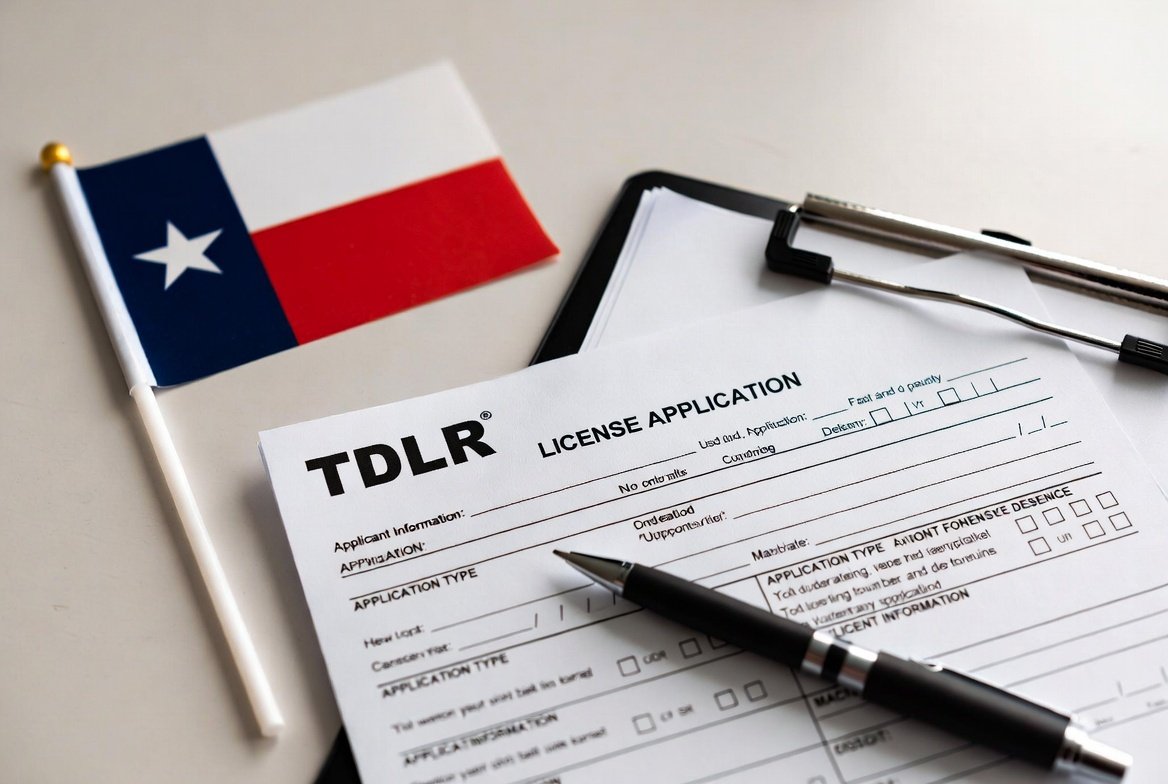
TDLR mini salon license Texas application checklist and requirements

TDLR Mini-Establishment License -- apply online for fastest processing

Gallery vs. Mini-Establishment

Understanding the Gallery-Establishment Relationship

One of the most common points of confusion with the mini salon license Texas is understanding how the gallery establishment and the mini-establishment relate to each other under TDLR rules.

Factor Gallery Establishment Mini-Establishment
What it is The licensed salon that contains and leases suites An enclosed, walled room or suite inside the gallery
License required Standard or Specialty Establishment License ($78) Mini-Establishment License ($70)
Common areas Responsible for maintaining all common areas and shared equipment Not responsible for common areas
Services allowed Sets the scope of services for the entire premises Can only offer services the gallery establishment is licensed for
Change of ownership Must re-apply for establishment license Not required to re-apply when gallery changes ownership
Independent contractor list Must file completed Independent Contractor List with application Must maintain records of all practitioners working in the suite
Avoid These Pitfalls

Common Mistakes That Delay a Mini Salon License

Knowing the requirements is one thing -- avoiding the errors that void or delay applications is another.

Applying Before Gallery Is Licensed

The gallery establishment's TDLR license must be active at the time of submission. Applying before the gallery is licensed will delay or invalidate your application.

Opening Before License Is Issued

TDLR is explicit: no services may be provided to clients until the license has been officially received. Operating early can result in disciplinary action.

Confusing Booth Rental With Mini-Establishment

A station inside an open-floor salon is not a mini-establishment. The mini-establishment license applies specifically to enclosed, walled suites -- not open booths.

Missing the One-Year Deadline

All physical requirements must be met within one year of the application receipt date. After that deadline, the application is voided and a new one must be submitted with a fresh fee.

Wrong Establishment Name on Application

The mini-establishment name (up to 40 characters, no punctuation) must match what appears on the license. Changing it post-issuance requires a separate TDLR process.

Assuming the Establishment License Covers CE

CE requirements apply to individual practitioner licenses, not establishment licenses. Suite operators must still complete their personal CE hours every renewal cycle.

Do Mini Salon Operators Need CE Hours?

Yes. Continuing education requirements in Texas apply to individual practitioner licenses -- not establishment licenses. If you hold a cosmetologist, esthetician, or other TDLR practitioner license, you still must complete the standard 4-hour CE requirement each two-year renewal cycle: 1 hour sanitation, 1 hour human trafficking awareness, and 2 hours of elective coursework.

Cosmetologists and estheticians licensed for 15 or more years may qualify for a reduced 2-hour CE requirement as of September 1, 2025. See the full breakdown in our guide: The 4-Hour Continuing Education Requirement for Texas Cosmetology.

4 hrsStandard CE requirement
2 hrs15+ year licensees
100%Online available
Staying licensed

Renewing a Mini Salon License in Texas

Getting the license is the easy half. A mini-establishment license runs on a fixed two-year cycle, and the penalties for letting it lapse escalate quickly. Here is what the renewal actually looks like.

2 years
License term

Valid for two years from the date of issue, not from the date you applied.

~60 days
Renewal notice

TDLR sends a notice roughly 60 days before expiration. Treat it as a courtesy, not a guarantee.

What Late Renewal Costs

The late-renewal structure is tiered, and the third tier is not automatic.

How long expiredPenaltyFeeNotes
90 days or less1.5x$105Straightforward late renewal
91 days to 18 months2x$140Still processed as a renewal
18 months to 3 years2x$140Requires executive director approval via the Request to Executive Director for Expired License Renewal form
The part that costs real money

An establishment whose license has expired may not continue to offer services to clients. This is not a paperwork technicality. An expired mini salon license means the suite stops operating legally on the expiration date, regardless of whether the renewal is in progress, and regardless of whether every practitioner inside holds a current individual license.

Practically, that means the renewal is a business-continuity deadline rather than an administrative one. Inspection and sanitation standards apply across the whole license period, not just at application, so a suite that has drifted out of compliance can find the renewal is the moment that catches up with it.

Common Questions

Frequently Asked Questions: Mini Salon License Texas

Not necessarily. If the renter is working in an open, non-enclosed area of the salon -- a traditional booth or station on the main floor -- they do not need a mini-establishment license. However, if the renter is working out of an enclosed, walled room or suite inside a licensed establishment, a mini-establishment license is required.
No. TDLR does not issue specialty mini-establishment licenses. Mini-establishment licensees may only perform the services allowed under the license type held by the gallery establishment. If the gallery holds a cosmetology establishment license, all cosmetology services are permitted within your suite.
Yes, provided they hold a valid Texas barbering or cosmetology license. The mini-establishment operator must maintain an active record of each person's name, license number, and license expiration date for everyone working in the suite.
When the gallery establishment changes ownership, the mini-establishments inside it are not required to re-apply for new licenses. Your existing mini-establishment license remains valid through its current expiration date.
The gallery establishment owner is responsible for maintaining all common areas and shared equipment. Mini-establishment operators are responsible only for their own enclosed suite space and any equipment within it.
No. Changing the mini-establishment type after submission requires filing a new application and paying the $70 fee again. Confirm the correct establishment type before submitting.
No. A mini-establishment must be located inside a licensed barbering or cosmetology establishment. It cannot be operated from a home or any location other than inside a licensed gallery establishment.
No. They serve a similar purpose -- licensing a place of business -- but a mini-establishment license is a distinct TDLR license type for operators working inside a larger gallery establishment. For the full landscape of Texas cosmetology establishment license types, see our guide: Texas Hair Salon License: TDLR Requirements and How to Apply.
TDLR-Approved CE Provider #2512

Complete Your Required CE Hours Before Your Next Renewal

Suite operators and independent cosmetologists still need to renew their individual practitioner license on time. Complete your 4-hour TDLR-required continuing education entirely online -- no test, no classroom, on your schedule.

Enroll Now -- Complete Online


4 Hours, 100% Online TDLR Provider #2512 Covers All 3 Required Topics Certificate on Completion
Texas cosmetologist completing mini salon license continuing education online

Leave a Comment

Your email address will not be published. Required fields are marked *

You were not leaving your cart just like that, right?

You were not leaving your cart just like that, right?

Enter your details below to save your shopping cart for later. And, who knows, maybe we will even send you a sweet discount code :)