
Texas Body Art Licensing

Microblading License in Texas: What You Need to Know

Microblading is one of Texas's fastest-growing beauty services — and one of the most misunderstood from a licensing standpoint. A cosmetologist or esthetician license is not enough. Here's exactly what Texas law requires.

TDLR Provider #2512
4-Hour Online Course
Texas-Approved CE
⚡ Quick Answer

Microblading is regulated by the Texas Department of State Health Services (DSHS) — not TDLR — under the state's body art framework. An esthetician or cosmetologist license does not cover microblading. The studio must be licensed by DSHS, and every artist must hold a current Bloodborne Pathogens certification.
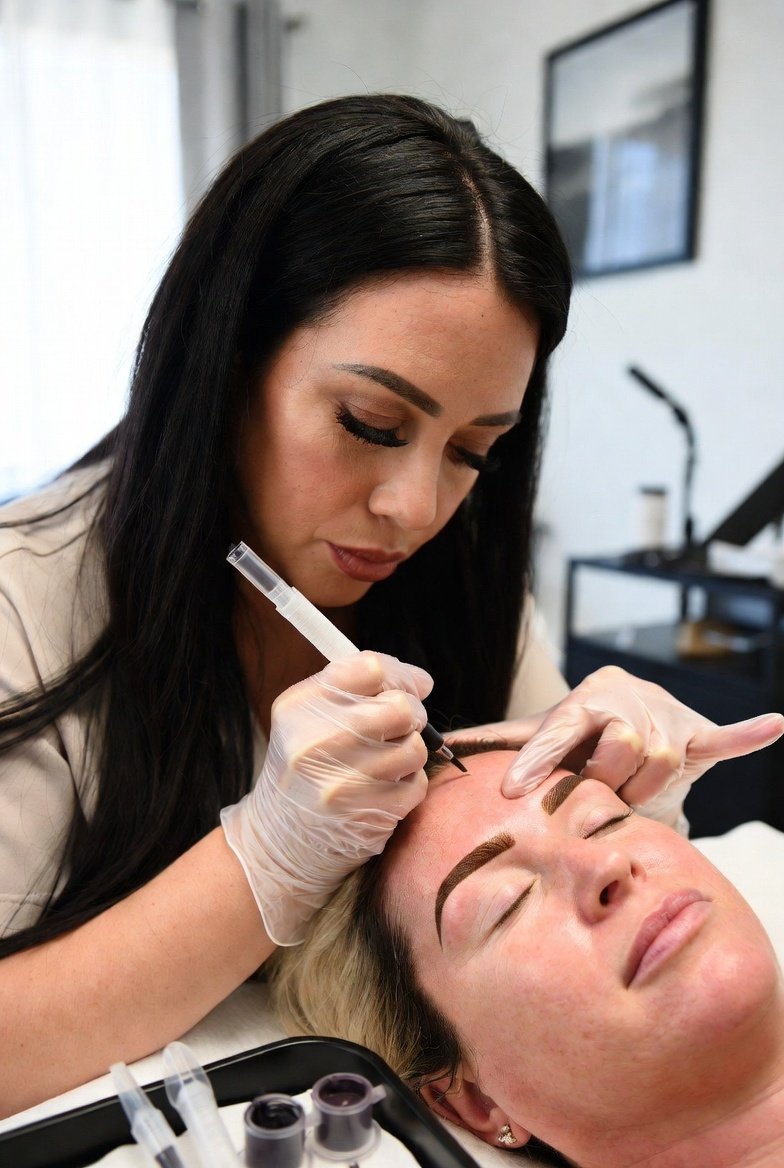
A licensed microblading artist performing an eyebrow treatment on a client in a Texas esthetics studio.
Licensing Overview

Why Microblading Is Regulated Differently in Texas

Because microblading penetrates the skin to deposit pigment, it falls under Texas body art law — a completely separate framework from cosmetology and esthetics, overseen by a different state agency.

⚠️ Common Misconception: Many microblading artists — and even some beauty schools — believe a TDLR esthetician license is sufficient to perform microblading in Texas. It is not. Microblading falls under the Texas Department of State Health Services (DSHS), not TDLR. A cosmetology or esthetics license does not authorize skin-penetrating services like microblading.

💄

Esthetics License (Not Enough)

Covers skin care services — facials, waxing, makeup application — but does not authorize skin penetration or pigment implantation. TDLR's esthetics license has no jurisdiction over microblading.

🩸

BBP Certification Required

Every artist performing microblading must maintain a current OSHA-compliant Bloodborne Pathogens (BBP) certification, renewed annually. Hepatitis B vaccination or a signed declination form is also required.

💉

Manual & Machine PMU: Same Rules

Texas treats manual microblading (hand tool) and machine permanent makeup (powder brows, ombre, lip blushing) identically — both fall under DSHS body art regulation as forms of cosmetic tattooing.

📋

Dual-Licensed Artists

A TDLR esthetician who wants to add microblading must ensure their studio holds a separate DSHS tattoo/PMU studio permit. The two licensing pathways are independent of one another.

⚖️

Enforcement Is Active

Texas DSHS actively inspects body art studios. Violations result in fines ranging from $400 to $1,725. Operating without a license is a Class A Misdemeanor under Texas Health & Safety Code Chapter 146.

Step-by-Step Process

How to Get Licensed for Microblading in Texas

The DSHS licensing pathway for microblading studios is distinct from the TDLR cosmetology route — here's what the process looks like from training to licensed practice.

1

Complete Bloodborne Pathogens Training

Every artist who will perform microblading must complete an OSHA-compliant Bloodborne Pathogens (BBP) certification course before touching clients. BBP certification must be renewed annually. Many approved online courses are available; the course typically takes 1–2 hours to complete.

2

Get Hepatitis B Vaccinated (or Sign a Declination)

Texas DSHS requires all body art practitioners to either complete the Hepatitis B vaccination series or sign a declination form acknowledging the elevated risk of bloodborne exposure. This documentation must be available at your studio for inspection.

3

Train in Microblading Technique & Aseptic Practice

While Texas does not mandate a minimum number of training hours, DSHS inspectors verify that artists have adequate training in aseptic technique, sterilization, infection control, and proper use of single-use implements. Comprehensive hands-on training from a reputable program is strongly recommended.

4

Secure a Zoning Approval for Your Location

Before applying for a DSHS studio permit, obtain written zoning confirmation from your local health department or zoning office verifying that a tattoo/permanent cosmetics studio is permitted at your specific address. DSHS requires this as part of the permit application.

5

Apply for a DSHS Tattoo/Permanent Cosmetics Studio Permit

Submit your studio permit application through the DSHS Regulatory Services Online Licensing System at dshs.texas.gov. The initial studio license fee is approximately $927 for a two-year permit (non-refundable). Mobile or temporary event locations require separate applications.

6

Pass a DSHS Health Inspection

DSHS will inspect your studio for compliance with sanitation standards, sterilization equipment, client record systems, and infection-control protocols before your permit is issued. Inspections are also conducted routinely and without advance notice after opening.

7

Renew Every Two Years (BBP Annually)

The DSHS studio permit is valid for two years and must be renewed. Individual artists must renew their BBP certification every year. If you also hold a TDLR esthetics or cosmetology license, that renewal requires 4 hours of TDLR-approved CE — txcosmetologyce.com (Provider #2512) offers an online course. Enroll here →

Investment & Career Outlook

Costs, Career Paths & What to Expect

Understanding the licensing costs and career possibilities helps aspiring microblading artists plan their path to a compliant, thriving practice.

💰 Licensing & Startup Costs
DSHS Tattoo/PMU Studio Permit (2 yr)~$927
OSHA BBP Certification (artist, annual)$10–$30
Hepatitis B Vaccine SeriesVaries by provider
Microblading Training Program$500–$3,000+
State Exam FeeNone required
TDLR CE (if dual-licensed)txcosmetologyce.com
CE Provider (TDLR)Provider #2512 ✓
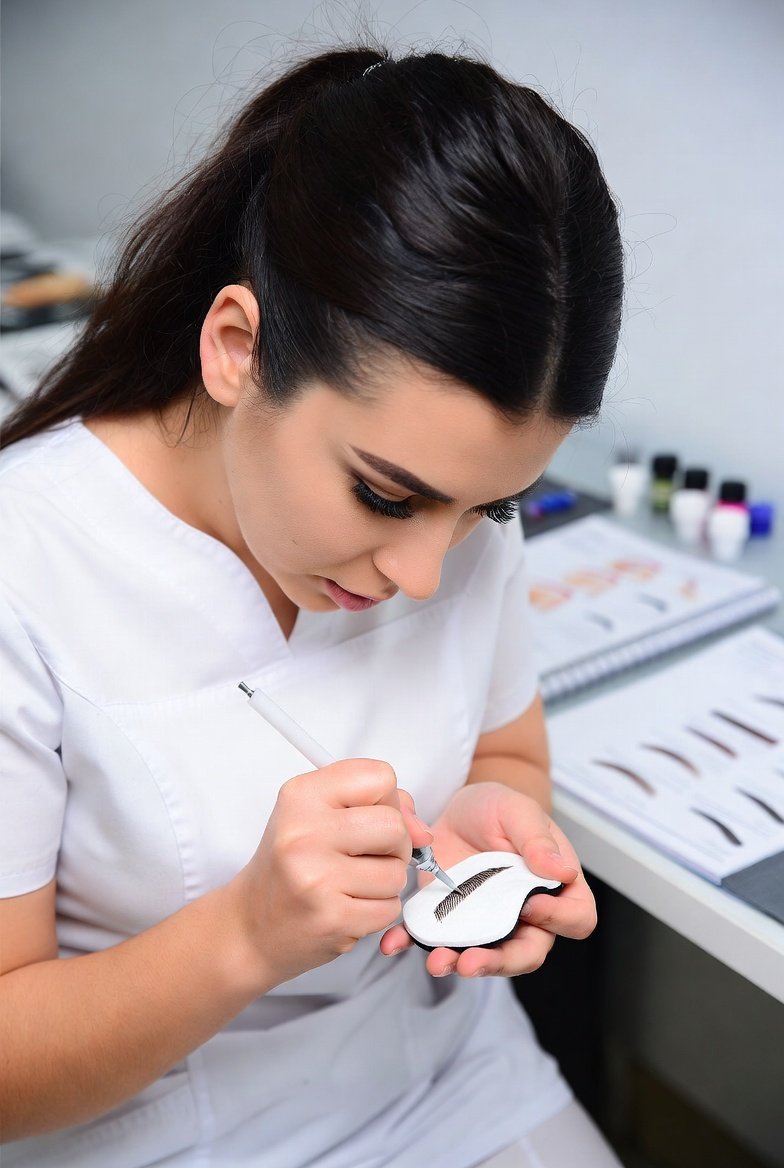
A student practicing microblading strokes during a Texas body art training session.

Hands-on training in aseptic technique is essential — DSHS inspectors verify that artists have sufficient experience

🚀 Career Paths & Opportunities

  • Microblading studio owner or independent artist
  • Powder brows, ombre brows & brow shading specialist
  • Lip blushing & full permanent makeup artist
  • Lash studio add-on services (with TDLR esthetics license)
  • Bridal and special event PMU artist
  • Medical & paramedical cosmetic tattooing (advanced)
  • Brand educator or microblading trainer
  • Salon suite operator / mobile PMU artist

Dual-licensing advantage: Artists who hold both a TDLR esthetician license and operate a DSHS-permitted studio can legally offer a full menu of brow, lash, skin, and PMU services — maximizing earning potential from a single studio setup.

Common Questions

Frequently Asked Questions

Everything Texas microblading artists and permanent makeup professionals need to know about DSHS licensing, BBP certification, and operating a compliant studio.

Yes — but not in the way most people expect. Texas does not individually license microblading artists. Instead, the studio or facility where microblading is performed must hold a current permit from the Texas Department of State Health Services (DSHS). Individual artists must maintain a valid OSHA-compliant Bloodborne Pathogens (BBP) certification, renewed annually. This system is completely separate from TDLR, which regulates cosmetology.
No. A TDLR esthetician license covers skin care services regulated by TDLR and does not authorize skin penetration or pigment implantation. Microblading falls under DSHS body art regulation — a separate agency with separate requirements. Estheticians who want to offer microblading must ensure their studio holds a DSHS Tattoo/Permanent Cosmetics Studio Permit.
The Texas Department of State Health Services (DSHS) regulates microblading, permanent cosmetics, and all forms of cosmetic tattooing under the Tattoo and Certain Body Piercing Studio Act (Texas Health & Safety Code Chapter 146). TDLR has no jurisdiction over these services. For current requirements, visit dshs.texas.gov/tattoo-body-piercing-studios.
Texas does not mandate a minimum number of training hours for microblading artists. However, DSHS inspectors verify that artists have adequate training in aseptic technique and infection control. Reputable training programs range from intensive weekend workshops to week-long courses. For a skin-penetrating service, more comprehensive hands-on training is strongly recommended — regardless of state minimums.
Yes. Any location where microblading or permanent cosmetics is performed — whether a standalone studio, salon suite, or home-based setting — must hold a current DSHS Tattoo/Permanent Cosmetics Studio Permit. Permits are site-specific: each physical address requires its own permit. The initial permit fee is approximately $927 for a two-year license. Applications are submitted online through the DSHS Regulatory Services portal.
Yes. Texas DSHS explicitly groups microblading, permanent cosmetics, and traditional tattooing under the same regulatory framework (Texas Health & Safety Code Chapter 146). Both manual microblading (hand tool) and machine-based permanent makeup — powder brows, ombre, lip blushing — are treated identically as forms of cosmetic tattooing and require the same DSHS studio permit.
Operating a tattoo or permanent cosmetics studio without a DSHS permit is a violation of Texas Health & Safety Code Chapter 146. Penalties from recent DSHS enforcement actions have ranged from $400 to $1,725 per violation. Criminal violations are classified as Class A Misdemeanors. DSHS inspectors conduct routine and complaint-based inspections, and unlicensed studios are actively pursued.
TDLR-Approved CE — Provider #2512

Also Hold a Texas Cosmetology or Esthetics License?

If you hold a TDLR cosmetology or esthetics license alongside your DSHS microblading credentials, your TDLR renewal still requires 4 hours of approved CE. txcosmetologyce.com (Provider #2512) offers a convenient online course — complete it on your schedule.

✓ Enroll Now — Complete CE Online
TDLR-Approved Provider #2512
4 Credit Hours
100% Online
Complete at Your Own Pace